
This is an old revision of the document!
Table of Contents
What is the best Bible Translation?
Types of translations
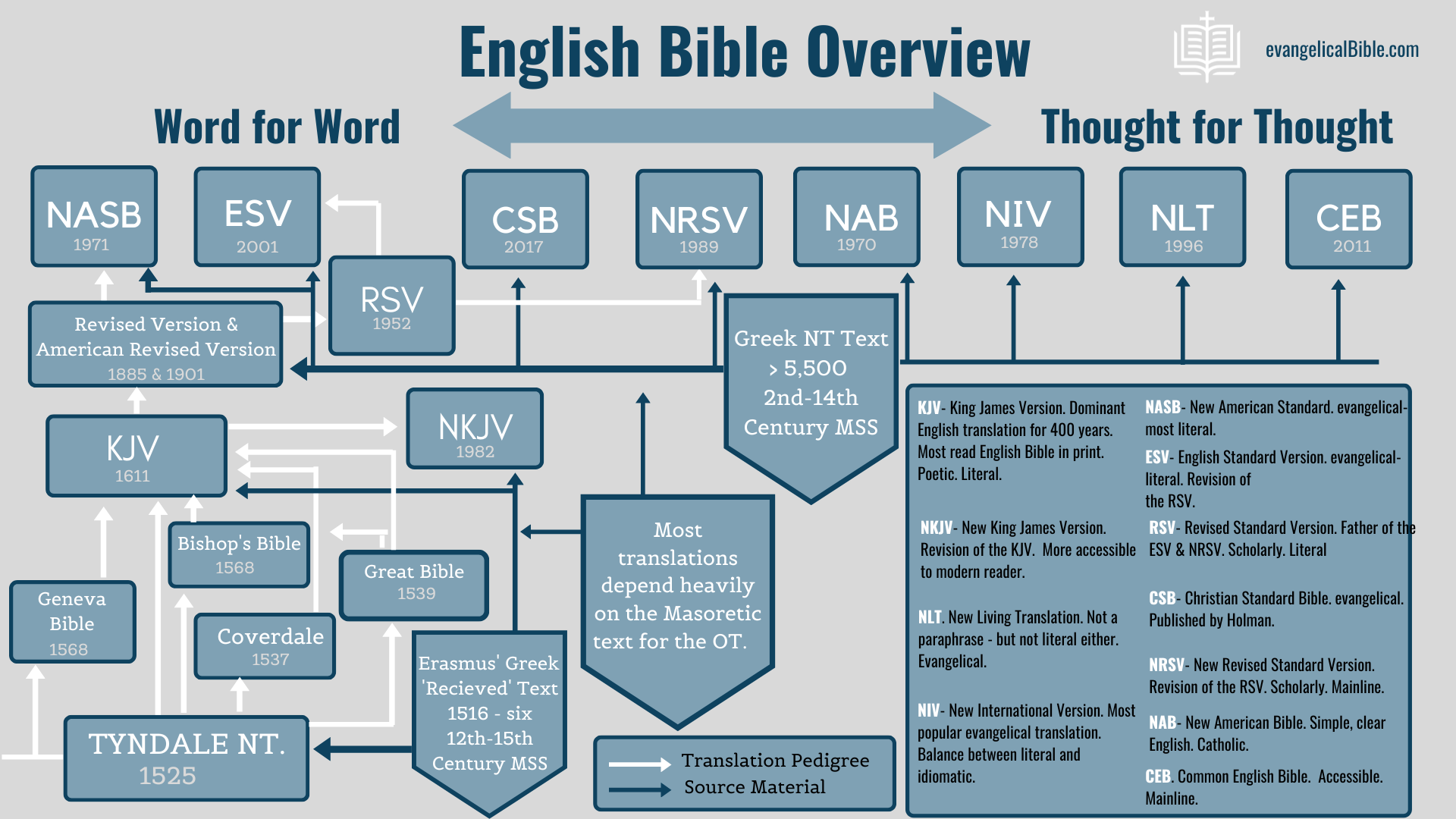
Bibles are on a spectrum between word for word, through thought for thought to complete rewrites or paraphases.
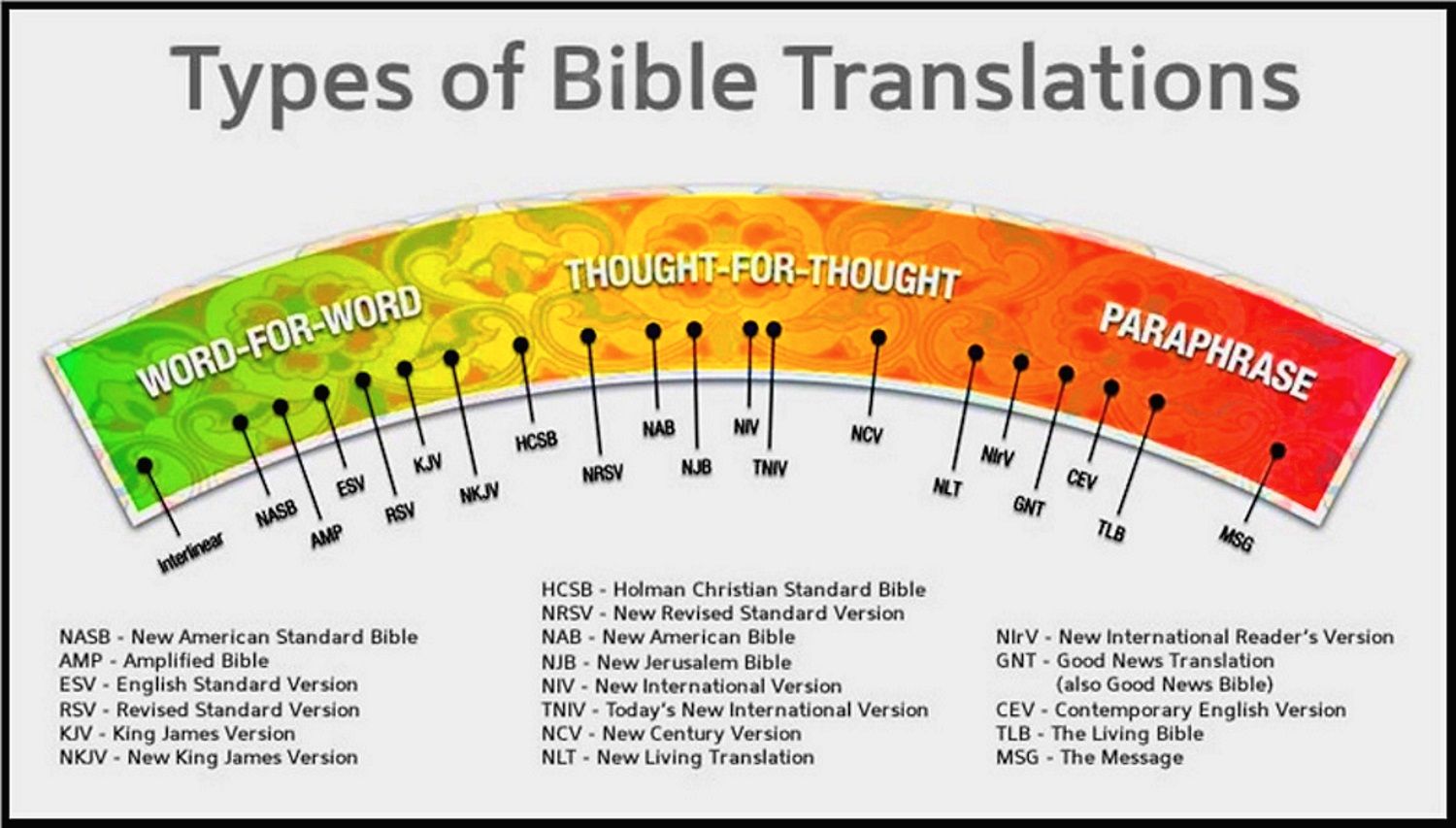
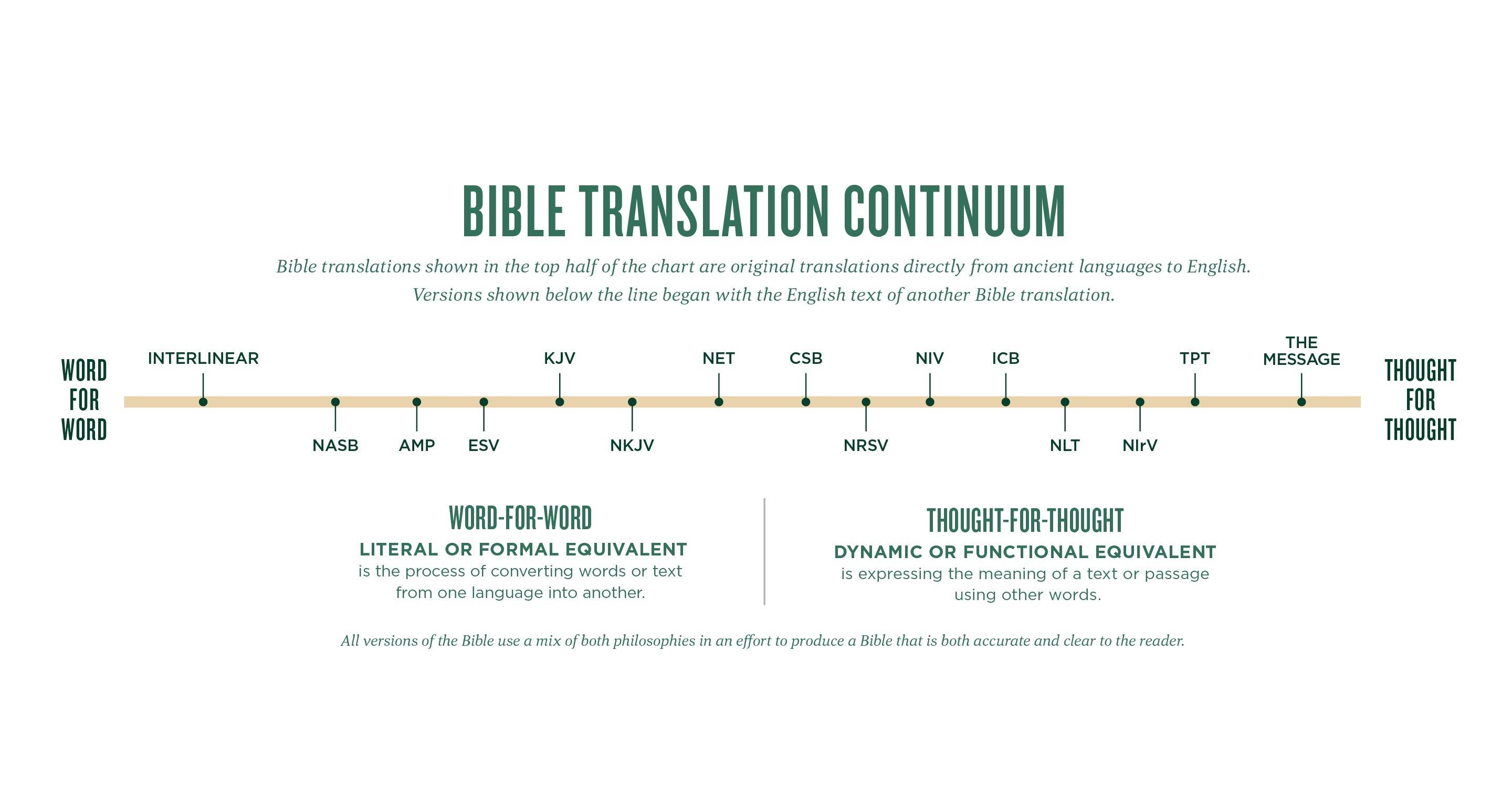
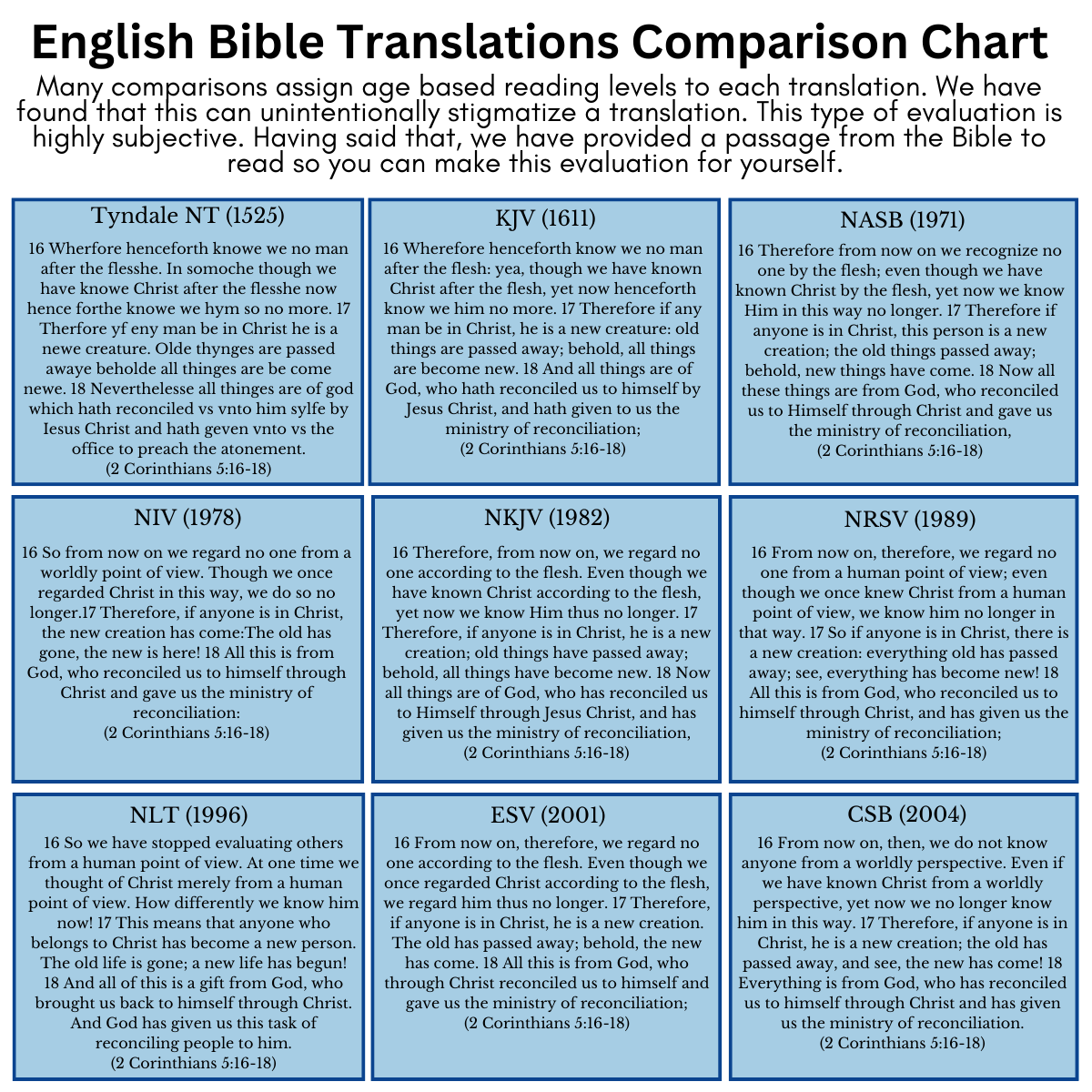 https://evangelicalbible.com/bible-translation-guide/
I think that the further to the left you go on this scale, the closer to the truth you get but also the more difficult the translation is to read and the opposite the further right that you go. For example, an interlinear Bible is all but unreadable but it's a direct word for word translation from the original Greek or Hebrew. Eugene Petersen's The Message is easily read but it's ultimately just his opinion on what the truth of the Bible is. My opinion is that you should stay as far to the left as you are comfortable reading. Personally, I find the NASB difficult to understand and a chore to read, but I am perfectly comfortable reading the Amplified Bible which is my personal favorite. I also spend a lot of time in the CSB, NET and ESV Bibles.
My advice is to have several translations available; this is really easy online or with a Bible study app. I have a book that contains four translations side by side. It's not the best Bible to read necessarily, but it's great for study. Any time that you have difficulty understanding a passage in the one you are reading, check it in a different translation and a good commentary. This is especially true if you come read something that seems contrary to your understanding of God's nature. God is perfectly good, perfectly just, all wise and all knowing. If you think that what you read contradicts that, then your interpretation was probable wrong. However, it's important not to lean too much on our own understanding. If what you think is contradicted by the scripture, the scripture should win. We also must be willing to admit that there are certain things that we aren't going to be able to understand in the here and now. We will have to wait until we know and are known (1 Cor 13:12).
One other piece of advice that I will offer
Translation Sources
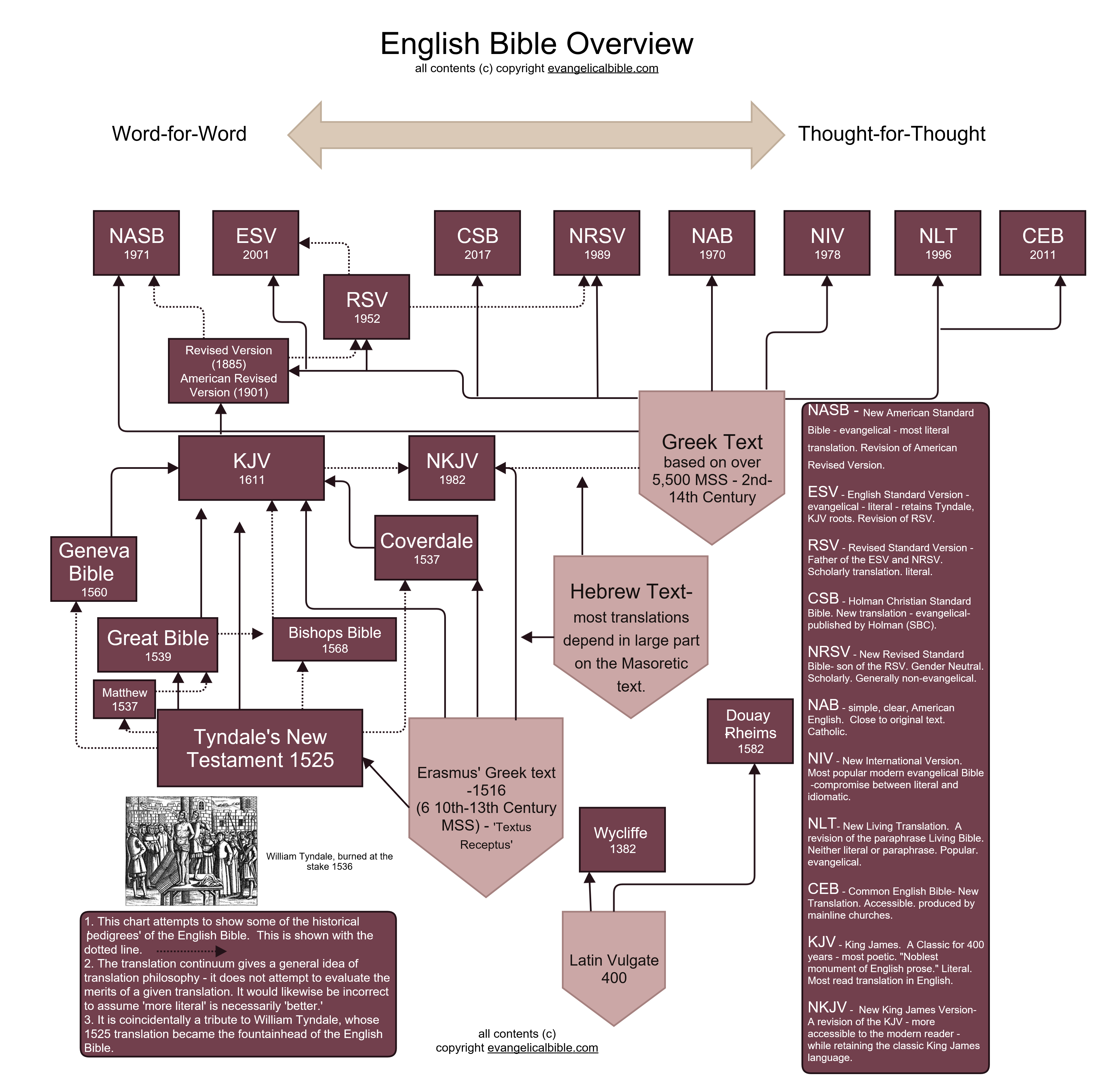
References
Why do I like the Amplified Bible so much?
The Logos Bible Study website has a good description of what the Amplified Bible is (and isn't). Basically, the Amplified Bible has study notes, or commentary built right into the text. You don't need to stop reading and look at a footnote for the clarification. There are several levels of this, added context in parentheses are definitions to elaborate on the original languages. Added context in square brackets are brief commentary that aren't part of the original languages but that are supported by other parts of the Bible or historical and cultural references.